
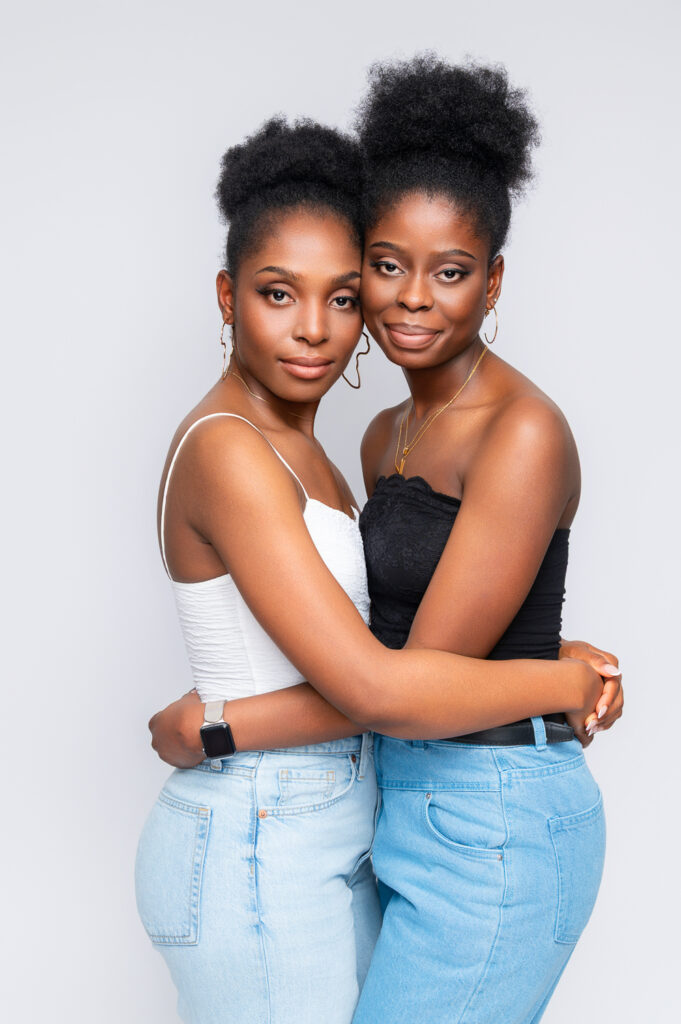
Nine out of ten clients tell me, within the first two minutes of arriving at the studio, that they “hate having their photo taken.”
It’s almost a ritual at this point. They walk in, set down their bag, and immediately confess.
I tell them the same thing every time: that’s normal, that’s the average starting point, and by the end of the session they’re going to forget the camera is there.
Most of them don’t believe me. By the time we’re picking favourites, they’re surprised at how much they like the photos. Not just liking them but actively choosing between them. Going “I love that one, but this one has my real smile.”
That shift, from defensive to engaged, is the actual job of a photographer. The technical work is real, but it’s secondary. If I can’t make someone comfortable in front of the camera, the lighting and lens don’t matter.
Here’s how I actually do it.
The first five minutes are not about photos.
I don’t pick up the camera right away. We talk. About their job, what the photo is for, what they’re hoping to use it for, what they’ve hated about past headshots. By the time I start shooting, I know what we’re aiming at. They’ve also had time to settle. The studio stops feeling like a doctor’s office and starts feeling like a conversation.
I shoot the first ten frames knowing they won’t be used.
The first set of photos is throwaway. I don’t tell clients this, but I’m using those frames to let them warm up. I tell them what to do with their hands, their weight, their chin. They’re stiff. That’s fine.
By frame fifteen or so, they’ve stopped thinking. That’s when the real session starts.
I show them photos along the way.
Every five or ten frames, I turn the screen around and we look together. This breaks the tension. They see they don’t look bad. They see what’s working. They get curious. The mood shifts from “let’s survive this” to “let’s get something great.”
This is also when I make adjustments. “Drop the shoulders a bit.” “The blazer is bunching on this side.” “Let’s try a softer expression for a few.” Real-time feedback turns a session into a collaboration instead of a procedure.
I never say “smile.”
Telling someone to smile produces the worst smile in their repertoire. Instead, I tell stories. I ask questions. I say something mildly absurd. The genuine half-laugh that comes out is what we want.
A real expression always beats a posed one. Always. Even a slightly serious shot looks better when the eyes are alive than when they’re glazed.
The session as relationship, not transaction.
The reason I care about this stuff is that a headshot session is one of the few times most people will be photographed alone, intentionally, by a professional. For a lot of clients, it’s the first time. The experience matters.
Clients who walk out feeling good about the session don’t just leave with better photos. They come back for the next round. They send their team. They tell their friends.
A photo is a record of a moment. If the moment was awkward, the photo will show it. If the moment was easy, that shows too.
That’s the part that doesn’t show up in the technical specs. But it’s the whole job.